What changes, what's safe, and how prenatal Pilates supports your back, breath, and pelvic floor — with your doctor's green light.
Is Pilates safe during pregnancy? For most healthy pregnancies, yes — provided your doctor has cleared you for exercise and your instructor adapts every session. Prenatal Pilates focuses on breath, posture, gentle strength, and pelvic-floor awareness, and avoids positions that don't belong in pregnancy: deep flexion (crunches), breath-holding, and — in later trimesters — lying flat on the back.
First trimester: if you practiced before pregnancy, you can usually continue with light modifications; if you're new, wait for medical clearance and start gently. Fatigue and nausea set the pace — a good instructor programs around your energy, not a fixed plan.
Second trimester: for most clients, the best window. Energy returns, the bump changes your centre of gravity, and sessions shift toward posture support: mid-back mobility, glute and leg strength, side-lying and seated work, and breath patterns that will matter during delivery.
Third trimester: everything slows and opens. Work focuses on hip mobility, pelvic-floor release (not just strengthening), breathing space for compressed lungs, and comfortable positions — supported kneeling, side-lying, upright work. The goal is comfort and preparation, not progression.
Postpartum: after your medical check (commonly around six weeks, longer after a caesarean), Pilates is one of the best-studied ways to rebuild the deep core and pelvic floor before returning to impact sport. Rushing this stage is the classic mistake; rebuilding it properly is precisely what the method was designed for.
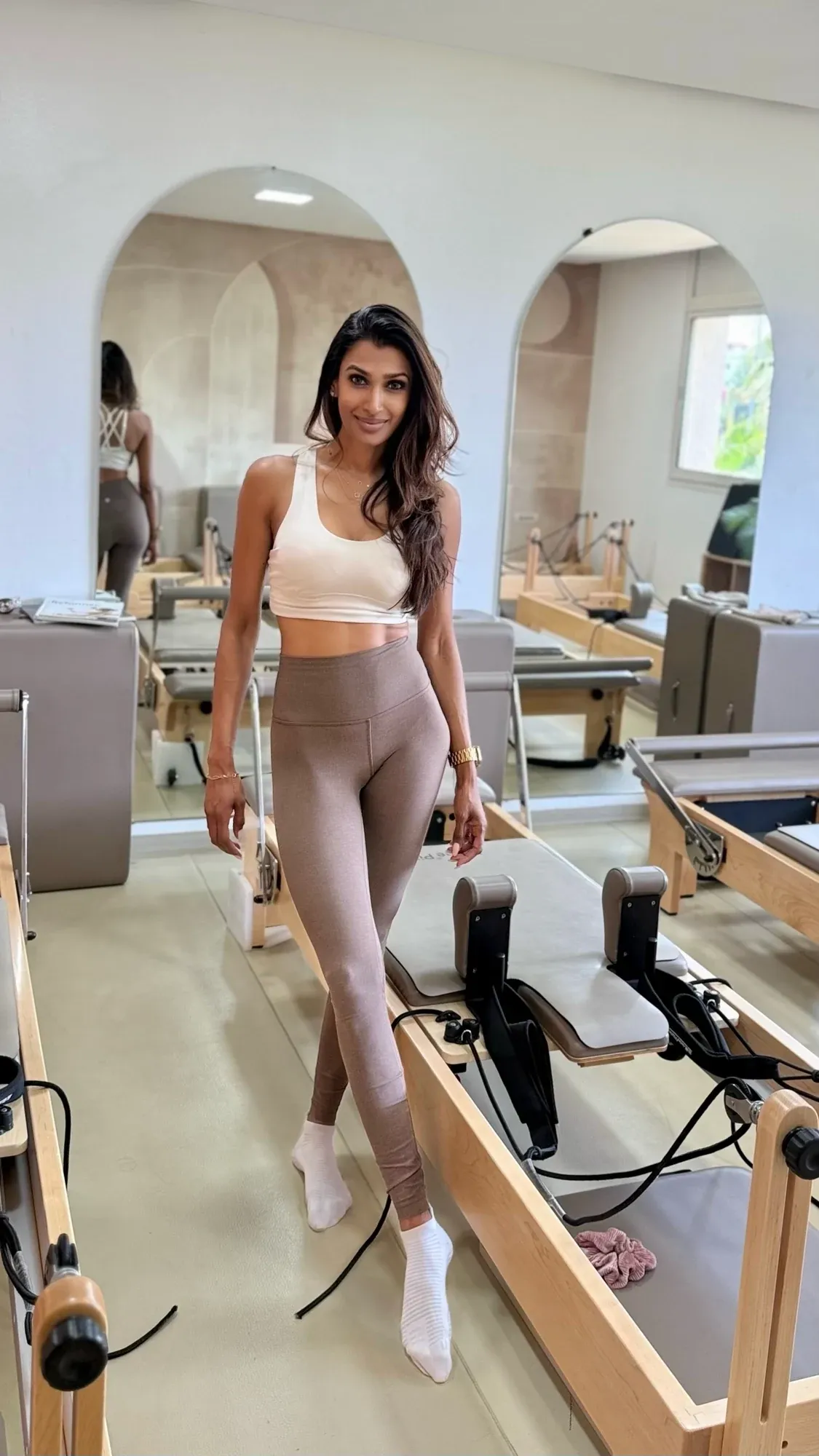
At Define Pilates in Rabat, prenatal and postnatal work is done in private one-on-one sessions so every exercise matches your week — not an average of the room. Bring your doctor's clearance, and we take it from there.
✳Written at the studio, Hay RiadUpdated Jul 21, 2026